Sunday, 21 July 2013

A Little Bit Of Effort Results In Rich Rewards

I visited the Central Lakeland Fells during the week for a mighty circular route that encompassed Tarn Crag, High Raise, Sergeant Man, Thunacar Knott, Pavey Ark, and Harrison Stickle; starting and finishing in Grassmere. From Grassmere I headed up through Easedale and the Sour Milk Gyll to Easedale Tarn, then turned North to the steep climb up to Tarn Crag which is were I caught up with my main target for the day..... Mountain Ringlet. The Mountain Ringlet is an extremely rare species in England, with the population consisting of just a small number of locations in Cumbrian high plateaus, coupled with this its numbers can fluctuate widely from year-to-year, warm sunny days are needed to to persuade them to fly (which can be in short supply in the Lakes), and the adults only have a very short flight period; leading to this species being very 'hit-and-miss', however, I timed it just right and ended up finding very good numbers. On Tarn Crag alone I must have found 60+, with many more on plateaus around High Raise, Sergeant Man, and Thunacar Knott; all-in-all at least 110 could be seen (probably the most I will ever see in a day). They proved very difficult to photograph as the females were busy egg laying in the tightly packed grasses and the males wouldn't alight for long before they were off chasing rival males that entered their territory, in-fact the best chance to photograph one came from finding one with a damaged wing! A fantastic little butterfly that lives in one of the most stunning areas of the country (see the photos!).
 
Apart from the Mountain Ringlets, 3 Dark-Green Fritilary, 2 Pearl-Bordered Fritilary, Black Darter, 2 Golden-Ringed Dragonfly, 20+ Four-Spotted Chaser, Round-Leaved Sundew, Butterwort, Heath-Spotted Orchid, Peregrine, Kestrel, Buzzard, Pied Flycatcher, Whinchat, 3 Redstart, and a Dipper. Some great sightings and one of the best walks I have done in a long time. 
 
 
Heath-Spotted Orchid - Easedale

Sour-Milk Gyll, Easedale

Easedale Tarn

Codale Tarn from Tarn Crag

Tarn Crag


Perched Boulder on Pavey Ark

Stickle Tarn and Pavey Ark
Mountain Ringlet
Mountain Ringlet


Harrison Stickle from Pavey Ark

Round-Leaved Sundew

Kestrel - Harrison Stickle

Wednesday, 17 July 2013

Anderton Nature Reserve

Common Darter - Anderton Nature Reserve
I was down in Alsager near Stoke-On-Trent yesterday morning carrying out a hedgerow survey on an area to be affected by development, nothing amazing to be found there yet nesting Blackcaps and Greenfinch were nice finds, as was Small Skipper, Gatekeeper, and Meadow Brown Butterflies. Also Sparrowhawk carrying prey, Great Spotted Woodpeckers, Nuthatch, and singing Chiff Chaffs nearby added to the mornings tally. 

Four-Spotted Chaser - Anderton Nature Reserve
On the way home I stopped in at Anderton Nature Reserve near Marbury Country Park, to check for Dragonflies and Butterflys (I haven't been for a couple of years but it is a good site), and I wasn't let down; best of all was a Purple Hairstreak, it is getting to the optimum time of year for this species now and they can be found more locally at Liverpool Cricket Club off Aigburth Road. It is a great little site which has a great amount of potential and is connected to other areas of natural importance nearby by a series of footpaths.

Anderton Nature Reserve
Common Darter - Anderton Nature Reserve

Brown Hawker - 9
Emperor - 1
Southern Hawker - 1
Common Darter -12
Four Spotted Chaser - 3
Common Blue Damselfly - 30+
Azure Damselfly - 15+
Blue-Tailed Damselfly - 7
Emerald Damselfly - 2
Purple Hairstreak - 1
Gatekeeper -35+
Meadow Brown - 10+
Red Admiral - 1
Comma - 1
Speckled Wood - 4
Small Tortershell - 9
Grey Wagtail - 6
Common Buzzard - 1
Lesser Whitethroat - 1
Sedge Warbler - 1
Reed Bunting - 2
Pied Wagtail - 3

Small Tortershell - Anderton Nature Reserve


Damsels, Skimmers, and Emperors!

Sefton Park Main Lake
Common Buzzard - Greenbank Park

During this amazingly warm period (we have been waiting five years for it!) certain species can be easy to find, especially Dragonflies, in Sefton Park I have recently viewed at least 250 Common Blue Damselflies on the main lake, which in-turn have attracted the magnificent Emperor Dragonflies that prey upon the Damsels; at least four males and two females can be seen patrolling the main lake plus a pair on the the first pond. By far the best record is that of Black-Tailed Skimmers; with three males holding territory along the South-East shoreline of the main lake, at least two females were at the site during the weekend, so breeding may well  be confirmed this year. This species is a relatively new species in the region, over the last few years they have spread North and can now be found on the Sefton Coast and South-Lancs, and with the ecological improvements to Liverpool's Parks resulting in increasing biodiversity this species looks like it may become a regular now.
 
Black-Tailed Skimmer - Sefton Park
Great Crested Grebe family - Sefton Park
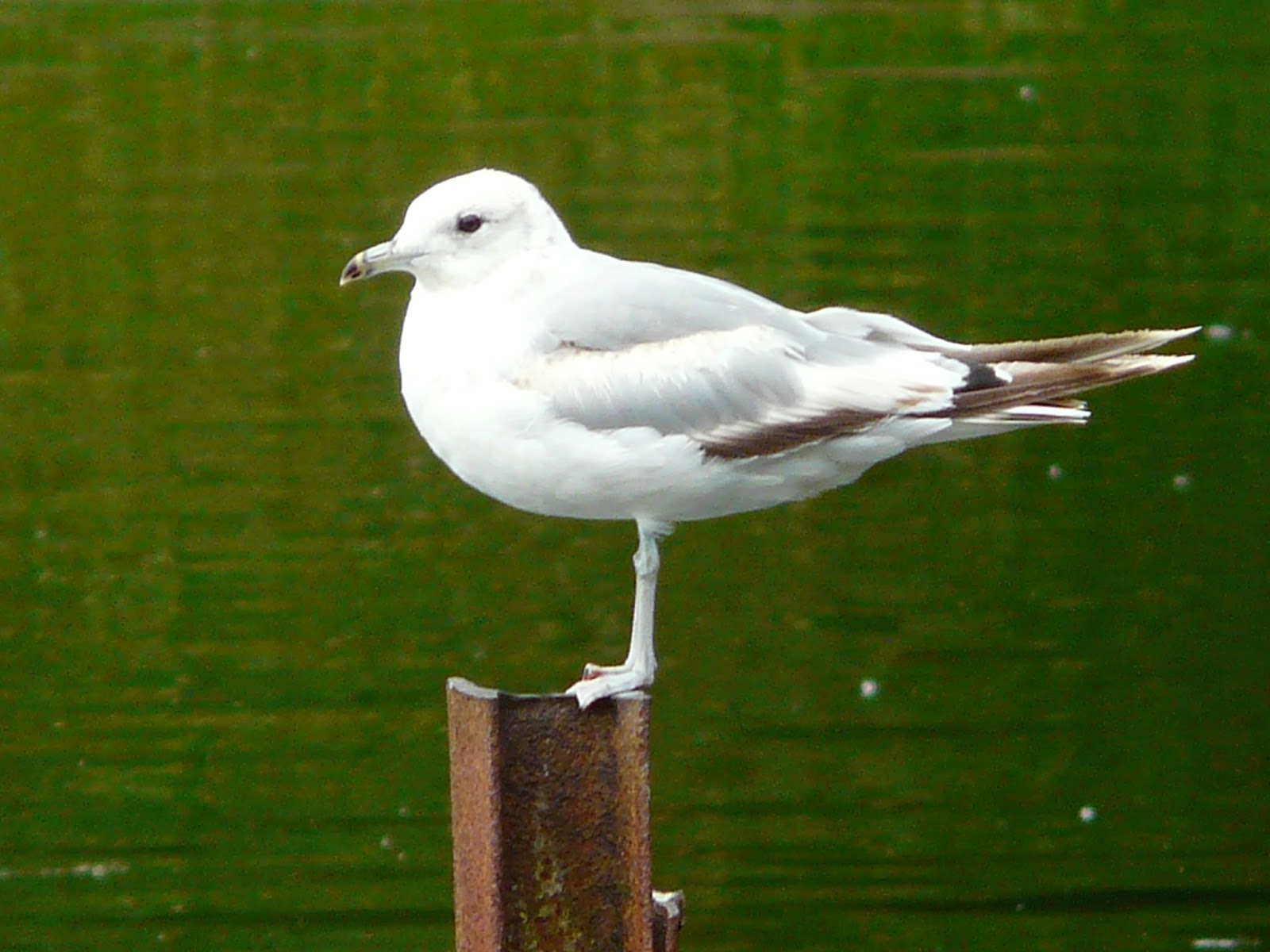
Apart from Dragonflies the Great Crested Grebes seem to have been through a bit of turmoil, only the female bird remains from the breeding pair and only two chicks remain, however the chicks are growing fast and hopefully should be to large for Gull attacks soon. The showy Great Crested Grebe that allows very close approach is still present and usually can be found fishing close to the shore. I couldn't find a Little Grebe nest but I would love to be proved wrong! If anyone knows what happened to the male Great Crested Grebe and the other chick please let me know, as well as the Mute Swan story too, as the family party is now back up to four juveniles; did two birds get taken into care by the RSPCA and then reintroduced? Two Herons have been fishing around the Band Stand and two have been in Greenbank Park too, Gulls numbers are starting to build up again (see photos on the right), with juvenile Black Headed Gulls and Common Gulls starting to return for the Autumn (bit of irony in this weather!), when the Common Gulls start returning Autumn migration is just around the corner!

In Greenbank Park a Common Buzzard has been making regular appearances during the mornings especially over the North-end of the park and Gorsedale Road; regularly circling at only treetop height before being harassed by Crows and Gulls and driven away. The Ring-Necked Parakeets are regular as is a huge Red-EaredTerrapin that suns itself on the islands.
Grey Heron - Sefton Park

Great Crested Grebe - Sefton Park


Monday, 8 July 2013

Round-Up

 
Grassmere from Loughrigg
A little time has passed since the last time and the breeding season is slowly ebbing away, with many birds busily feeding young, as the Great Crested Grebes are at Sefton Park (a job that became a little easier after a Lesser Black Backed Gull took a chick), the chick can be seen riding on females back and sometimes the males, hopefully the Little Grebes may successfully raise a brood late in the season as they did last year. The lone adult Great Crested Grebe still shows very well from the South-end of the main lake and the Mute Swan family was reduced to the adults and two chicks at Sefton after a series of dog attacks, on the positive side many pairs of Nuthatch have reared young, as have Stock Doves near to the Palm House. Huge numbers of Common Blue Damselfly can be seen over the surface of the main lake and two male Black-Tailed Skimmers have frequented the lake edges recently, with a pair of Emperor Dragonfly on the first raised lake; proving that the ecological wealth of the parks habitats is certainly increasing. Sparrowhawks and Common Buzzards can be seen spiralling above Sefton Park and surrounding areas, and certainly must be breeding locally. In the Cricket Club wood Foxes are regular and a family of Great Spotted Woodpeckers have been feeding. The river flowing from the large roadside cave has developed into a wonderful habitat; with Reeds, Yellow Flag Iris, and Purple Loosetrife flanking the water edges; last week I was startled when a Lesser Black Backed Gull dived Osprey like into the river and emerged with a Rat, these birds truly are the top avian predators in the area!
 
Great Crested Grebes - Sefton Park
 
In Greenbank park a family party of three Ring Necked Parakeets (which had not bred in the park)regularly fed in the park, with the adults successfully nesting in lakeside trees and rearing a second brood, which fledged today; noisily screeching around the North-end of the lake attracting attention off local Magpies. Three Mute Swans still use the lake but will not breed this year and a Cormorant and two Grey Herons feed on the lake during the early mornings. In the evenings Pipistrelles can be seen hunting the area, especially around the Greenbank Lane entrance area. The Honey Garlic clump has increased this year with 15 flower spikes this season.
 
Great Crested Grebes - Sefton Park
In Clarkes Gardens and Eric Hardy Nature reserve on Friday 3 Common Buzzards could be seen together with 2 Bullfinches, Siskin, 3 Chiff Chaffs, Blackcap, Willow Warbler, and Nuthatch, and in Hope University I could hear a Skylark singing distantly, probably coming from Childwall Fields NR.
 
Roe Deer - Waterhead Marsh
 
Recently I was walking in the Lake District near Ambleside and as we approached Ambleside in the car near Ambleside Rugby Club I was lucky enough to glance up as a Golden Eagle was being mobbed by a flock of Crows, my eldest boy Dylan (5) managed to get a better view than me as I had to glance at the road from time to time! Fantastic sighting albeit brief as it drifted off towards Under Loughrig and Rydal. I don't know were the bird originates from as the male bird at Haweswater usually stays close to its territory at this time of year, however I have seen the odd Golden Eagle in various places around the Lakes during the summer, their is still hope of the Haweswater bird finding another mate. In the Loughrigg/Rydall Water areas I found 3 Cuckoos, 5 Redstarts, Spotted Flycatcher, 2 Pied Flycatcher, 3 Wood Warblers, 10+ Tree Pipits, Common Buzzard, and best of all a male Goshawk. Walking along the River Rothay and Brathay leading to Waterhead Marsh a pair of Kingfishers were nesting in the riverside embankment, a female Goosander fed young on the fast flowing river, a Yellow Wagtail flew over, and signs of Otters could be found along the riversides.  fantastic area that I have been visiting for twenty years now and one that I will come back to year upon year.

View of Waterhead Marsh from Loughrigg


Rydal Caves above Rydal Water


Monday, 10 June 2013

Save Sefton Park Meadows

Thanks to Paul Slater for the post which I have pasted below:
 
Thanks for the updates. Nuthatches have also nested in an old concrete lamp-post, alongside the Sefton Park Meadowlands.
You may be aware that the Sefton Park Meadowlands are under threat, at present. The present administration of Liverpool City Council is proposing to sell them off, for housing. In order to do this, the Council has to, by law, advertise their intent to dispose of land that is presently public open space. Last week, in the back pages of the Liverpool Post was a tiny advert, to this effect. People have until 10:00, on Friday 14 June to lodge objections.
Representation can be made by e-mail, to Legal.Planning@liverpool.gov.uk (quoting reference PRT/TIG/Park Ave).
If they dispose of this site, then they will start looking around for other areas of public open space to dispose of. I would urge everybody who cares about open spaces in Liverpool, to object to this appalling idea of the present administration of Liverpool City Council.
Paul Slater
 
Save Sefton Park Meadows Logo
 
 
This campaign is a truly worthwhile cause, if the council is successful in selling the land to private developers, the green spaces around the city will potentially become 'fair game' in the constant drive by the council to become a 'facilitator' of corporate development that could see our green spaces decimated, with the usual 'administrative jargon' of the mixing of developments and green spaces as the answer....if you want to see how this doesn't work check Wavertree Technology Park out! If this open space is sold off then what will be next? Alerton Golf Course? Otterspool shore? The list of green space available to people seeking to line their already bulging pockets seems never ending. However, all is not lost; if the site is sold a new concert stage will be built in the park......thanks for that Joe Anderson!
 
If you would like further information click on the following links


Ynys Hir

Red Kite - Ynys Hir - June 2013
Ynys Hir - June 2013

Whilst on holiday in Wales last week I popped down to Ynys Hir RSPB nature reserve which is currently hosting Springwatch, I have visited the site many times over the years, it is always a fantastic place to watch wildlife and catch up with some of the best summer migrants.
 
juv Redstart - Ynys Hir - June 2013
I managed to find Wood Warblers, Redstarts, Pied Flycatchers, Garden Warblers all of which are classic species of the Welsh Oak woodlands, other highlights included a Snow Goose on the estuary, Red Kite, Yellow Wagtail, Grass Snake, Common Lizard, Little Egret, and Large Red Damselfly. The reserve is a top spot for Otter but the closest thing to an Otter I could find was an Otter spraint (poo!) on the boardwalk, maybe next time. A full roundup follows:-
Large Red Damselfly - Ynys Hir - June 2013
  • Wood Warbler - 12
  • Redstart - 8
  • Pied Flycatcher - 3
  • Garden Warbler - 2
  • Grasshopper Warbler - 1
  • Sedge Warbler - 7
  • Whitethroat - 1
  • Yellow Wagtail - 2
  • Redpoll - 20+
  • Crossbill - 8 flew North
  • Snow Goose - 1
  • Red Kite - 1
  • Common Buzzard - 2
  • Little Egret - 1
  • Grass Snake - 1
  • Common Lizard - 1
  • Large Red Damselfly - 30+
  • Four-Spot Chaser - 2
  • Ground Ivy
  • Cuckoo -2

Pied Flycatcher - Ynys Hir - June 2013


Wood Warbler - Ynys Hir - June 2013
Snow Goose - Ynys Hir - June 2013

Sunday, 9 June 2013

Ospreys.....the easy way

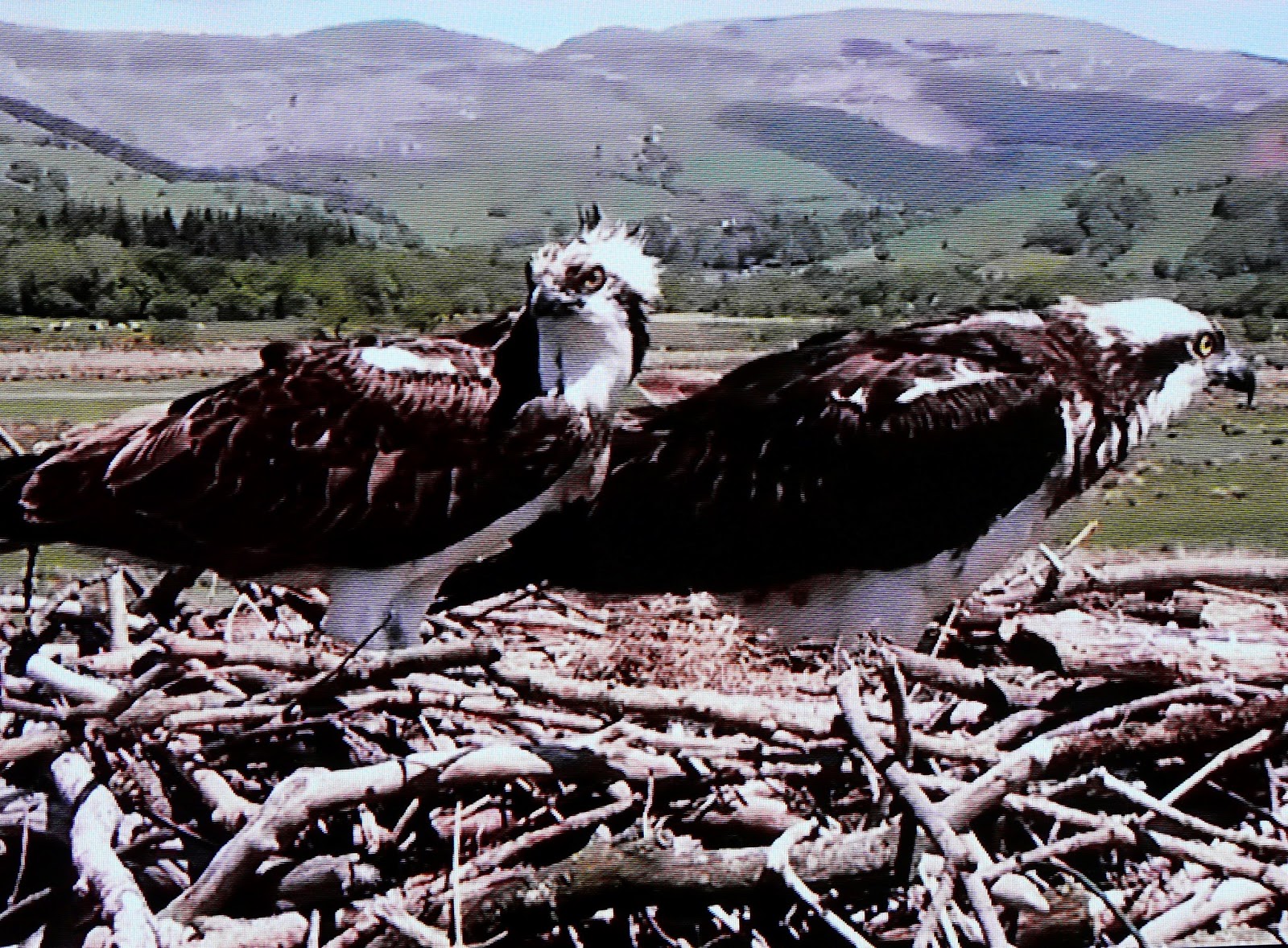
While in Wales over the last week we paid a visit to the Dyfi Osprey Project at Cors Dyfi Nature Reserve, it was my five year-old boys first Ospreys so it was a great time for him too, especially as he spotted a Red Kite above the car park at the reserve (a proud moment for me I have to admit). The Osprey's are very well known due to the coverage on Springwatch, and a dedicated group of volunteers provide excellent protection for the birds and detailed information for visitors. The visitor centre and hide provide live feeds of the nest site on HD TVs; this is were I took these dodgy photos from. Apart from the Ospreys great views of Lesser Redpolls and Siskins on the feeders outside of the hide was a nice surprise, as was a larger and very coloured Redpoll (see the right hand bird in the photo) which may have been a Common (Mealy) Redpoll.  


A local Catch Up

After being away for a few days (more on this to follow in the next post) on Friday I had a walk around the local area to see how some of the local breeding birds are getting along. In Sefton Park the best find was a family party of at least five young Grey Wagtails at the South-West corner of the lake, they were acting in a uncharacteristic way; moving about the branches of trees rather than feeding on the ground. The adult birds would occasionally appear with food for them, but this wont last for long as they look about ready to fully fledge. On the lake the pair of nesting Great Crested Grebes are still going strong and another third bird is usually to be found at the South-end of the lake opposite the small cafe....fingers crossed that young will appear soon. On the lake Swifts could be seen skimming the surface in search of insects and occasionally dropping their lower jaws into the water to catch a quick drink at top speed; an impressive feat. Small numbers of swallows hunt the area surrounding the lake and House Martins soar higher up above the South-end of the lake, the family of Mute Swans are still all accounted for, however, this cant be said for the Canada Goose family on the main lake which has dropped from five chicks to two; after two have been drowned by the male Mute Swan and another falling victim to another dog attack in the park, the pair of Little Grebes are still present but I couldn't see any new nesting site (but I would love to be wrong). Near the bandstand two Grey Herons hunted in the shallows and a Great Spotted Woodpecker, Chiff Chaff, and Ring-Necked Parakeet could be seen in the Dell area.
 
In Greenbank Park two pairs of Nuthatch and one pair of Great Spotted Woodpeckers are feeding young, two Grey Herons (different birds than Sefton), three Mute Swans, and a Red Eared Terrapin can be seen on the lake. Chiff Chaff and Willow Warbler still occasionally sing and Treecreepers are breeding in the wooded section. A Common Buzzard was mobbed by crows overhead and driven off towards Penny Lane. The clump of Honey Garlic is impressive now in the wooded section opposite Gorsebank Road and is well worth a look being one of only two North-West sites were it grows.

Moorhen - Greenbank Park

Great Crested Grebe (nesting) - Sefton Park

Treecreeper - Greenbank Park

Great Crested Grebe - Sefton Park

juv Grey Wagtail - Sefton Park

juv Grey Wagtails - Sefton Park

juv Grey Wagtail - Sefton Park

Ring Necked Parakeet - Sefton Park